
Why Foldable Panels — and Not Fixed to the Roof?
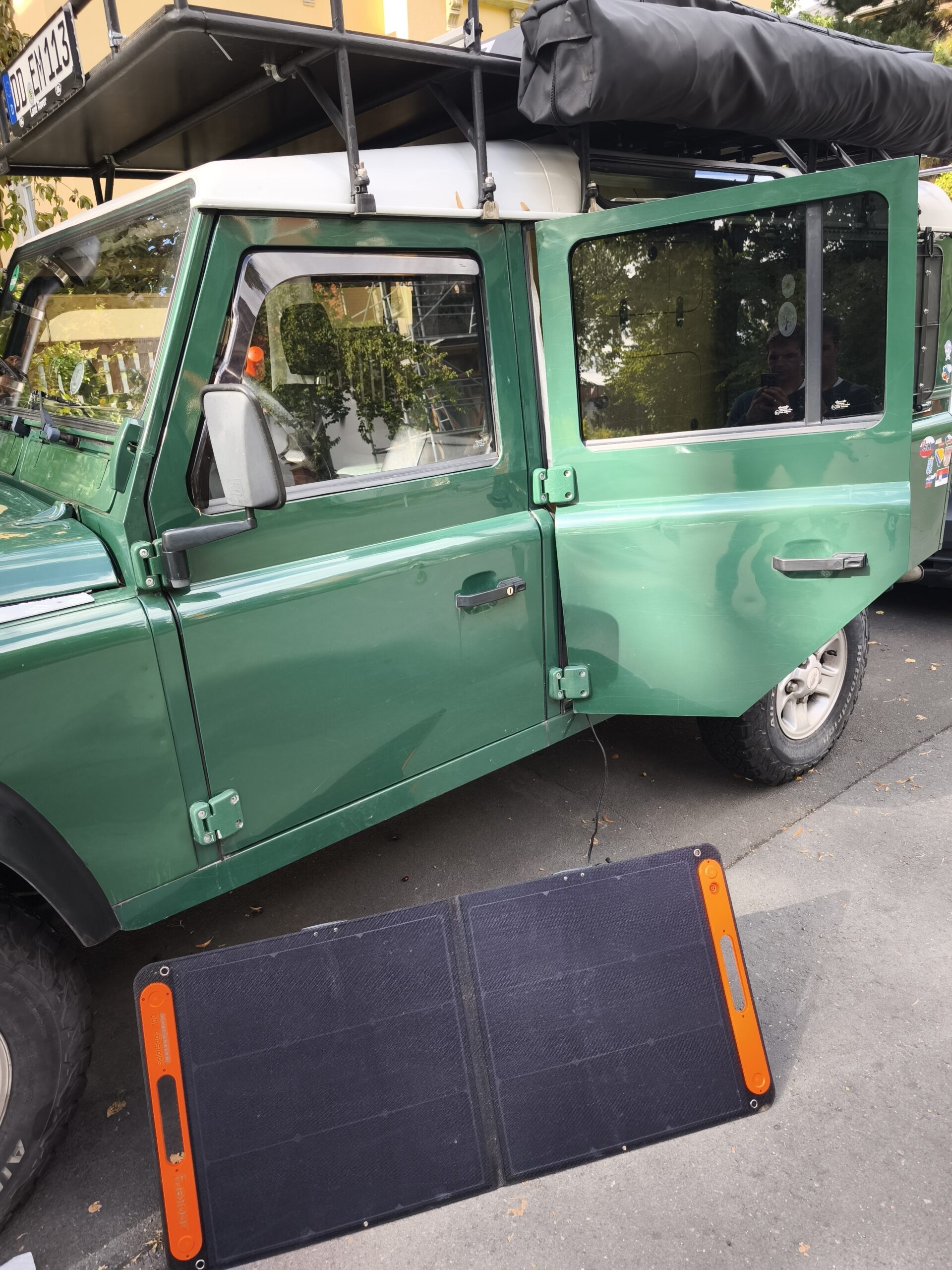
The obvious solution would have been a fixed solar panel on the roof. Sounds tidy — mount it once and forget about it. For the way we travel, though, it’s exactly the wrong choice.
The reason is simple: we park the Defender in the shade almost every time. In summer you don’t want to sit in a tin can that’s been baking in the sun all day — and the shady spot under a tree is just the nicer place to be. A fixed roof panel would be sitting exactly where no sun reaches. You’d have hardware on the roof and still nothing in the battery.
Foldable panels flip that around: the car sits in the shade, the panel sits in the sun. The sun is there — it’s just a little further away from the vehicle. That’s exactly where we put the panel, with a few metres of cable in between. No problem.
The second point: we don’t need to charge via solar while driving at all. That’s handled by the B2B charger from the alternator. Solar has exactly one job for us — charge when the car is parked. And when the car is parked, it’s in the shade. That made the decision for foldable pretty much inevitable.
Parts Overview
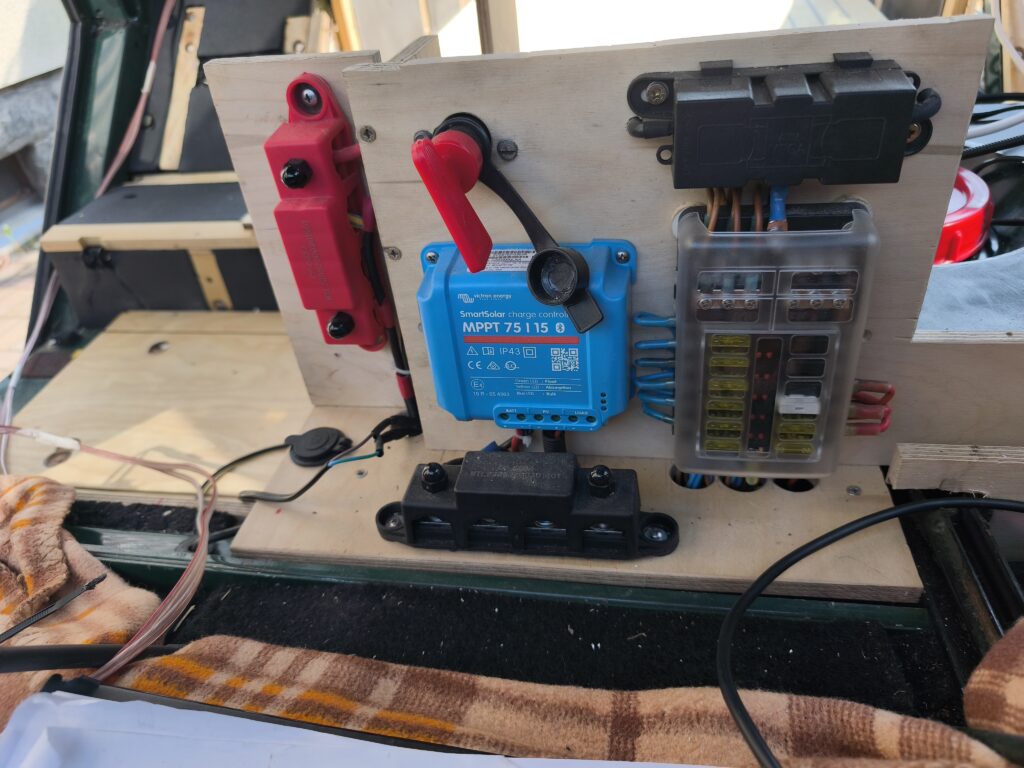
- Solar charge controller: Victron MPPT 75/15, readable via Bluetooth
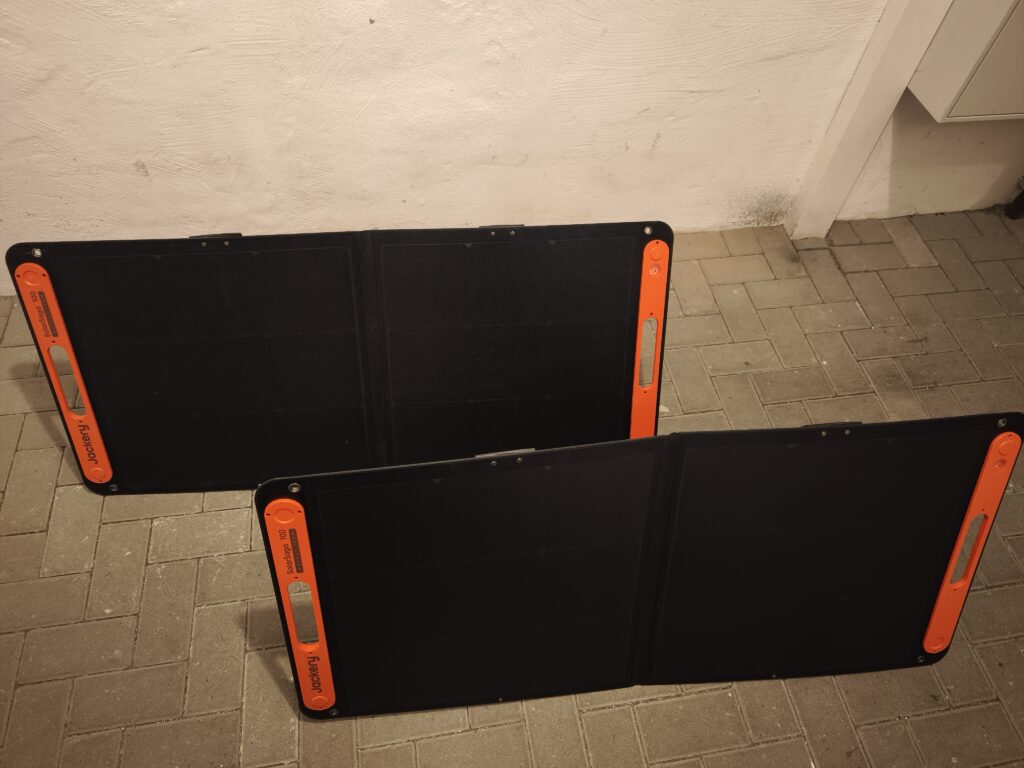
- 2× foldable solar panels, 100 W each
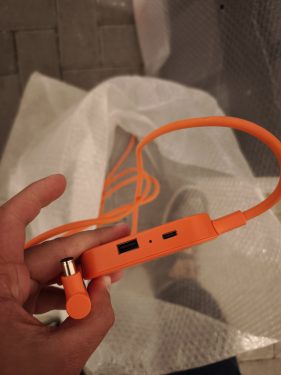
- Cable with USB-C socket
- Y-splitter with the matching connector for the solar cables
- Connected to our lithium battery on board
Deliberately compact. The more interesting question isn’t what’s installed, but how it holds up in daily use.
The MPPT Controller with Bluetooth: More Than a Gimmick
An MPPT controller extracts noticeably more from the panel than a simple PWM controller — especially when conditions aren’t perfect. Almost equally important to me though is the Bluetooth: via the app I can see in real time exactly how many watts are actually coming in.
That sounds like a novelty, but in practice it’s genuinely useful. I put the panel down, glance at my phone, and see immediately whether the angle is right — or whether one corner is in shade and output has dropped. You’re no longer orienting the panel by feel, but by the number that actually matters.
How We Use the Panels Day to Day
Most of the time we only put one panel out. For everyday use that’s more than enough — we’re not a power-hungry household on wheels. The second panel is the reserve for longer stays or overcast days. Since I work a lot on the laptop, with Starlink and the coolbox running we can easily need 100 W. Especially in northern Europe with limited sun hours, solar supply can get tight.
The real advantage is the flexibility: when the sun moves, the panel moves with it. We’re not tied to wherever the car happens to be parked.
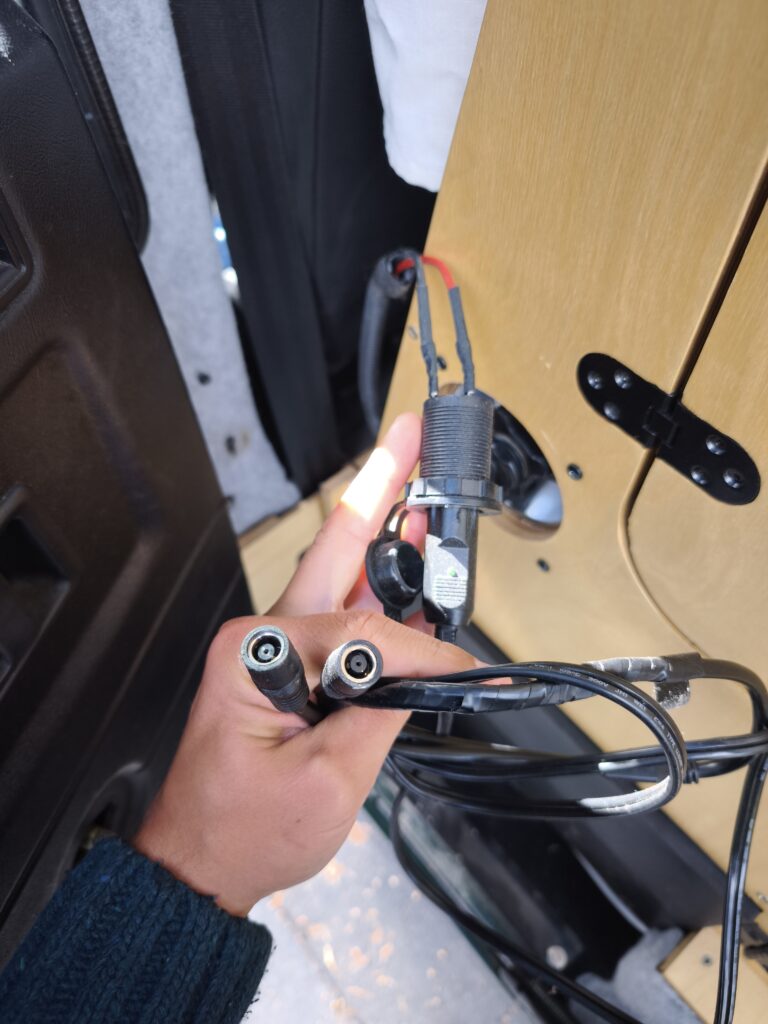
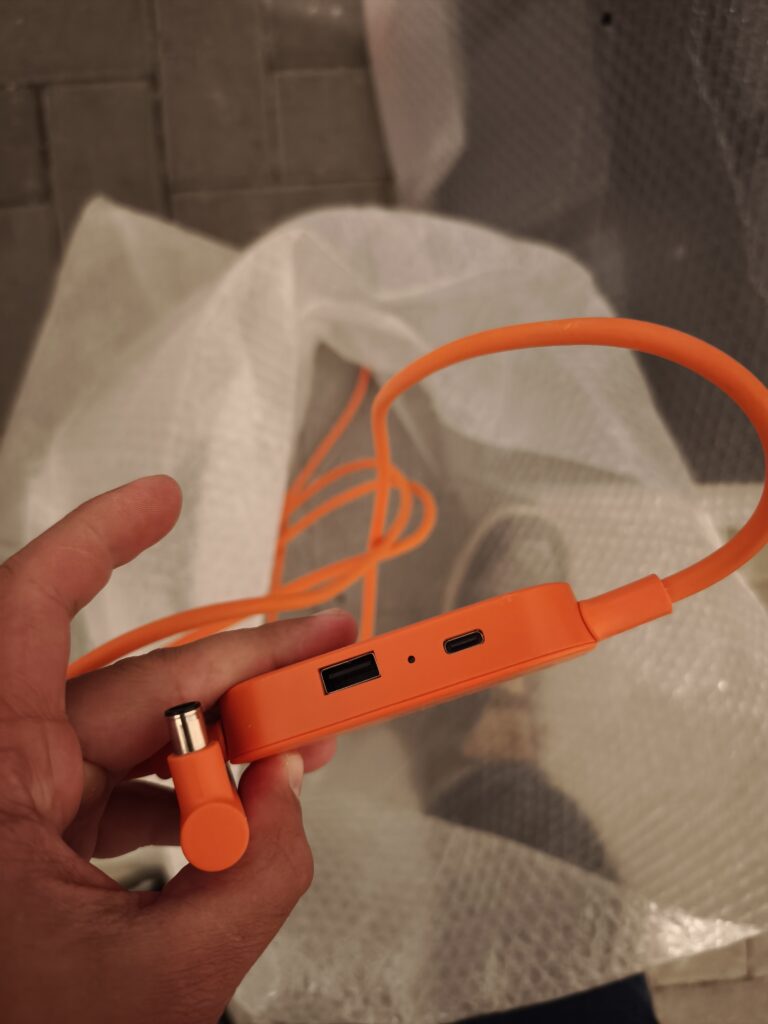
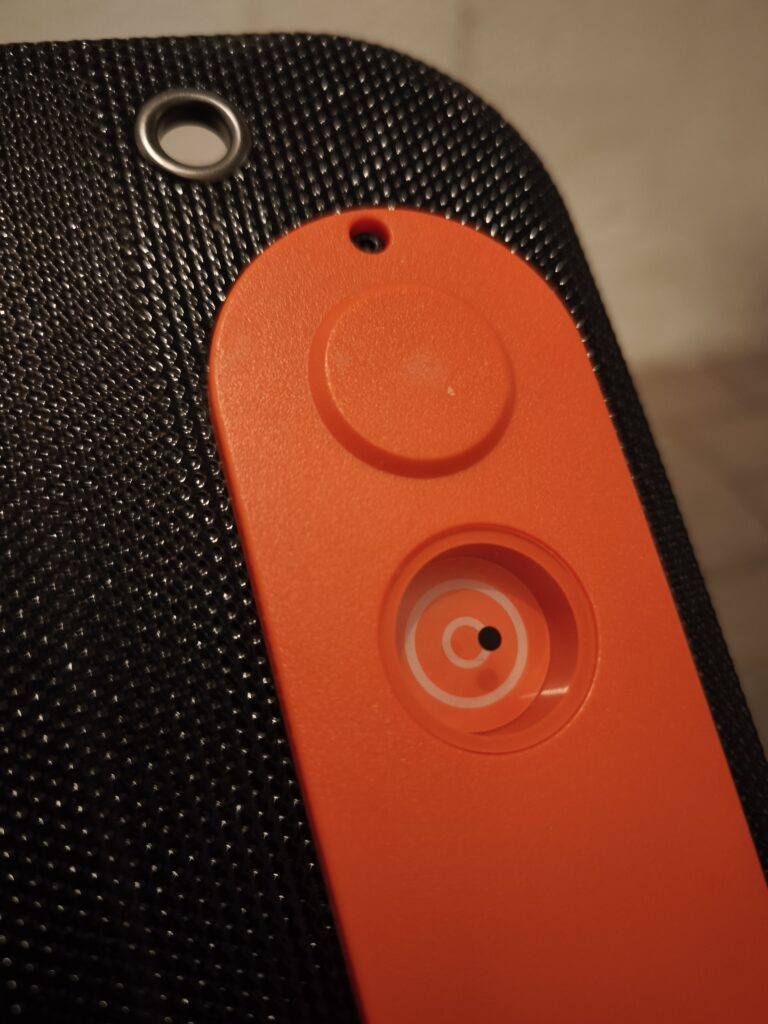
Everything connects via the supplied cables. Since we have two panels, we needed a Y-splitter between them, which can be disconnected from the charge controller at any time via a 12V car socket. The cables run out of the car through an open door. That’s no issue, since we only charge when we’re close to the car anyway. There’s also a USB-C socket built into the cable, which means we could take the foldable panel to the beach, for example, to charge a phone or power bank there. The foldable panel has a built-in alignment indicator — when the shadow falls exactly in the centre of the target, the panel is angled correctly.
nze über die mitgelieferten Kabel. Da wir zwei Panele haben, mussten wir einen y-Splitter dazwischenbringen, welcher über einen KFZ 12V Stecker jederzeit vom Solarladeregler getrennt werden kann. Die Kabel werden bei offener Tür aus dem Auto gelegt. Das ist soweit kein Problem, da wir sowieso nur Laden wenn wir in der Nähe des Autos sind. An dem Kabel ist zudem noch eine USB-C Buchse verbaut. Das heißt, dass wir auch mit dem Faltpanel z.B. an den Strand gehen könnten um dort Handy oder Powerbank zu laden. Das Faltpanel besitz eine Anzeige, wann es passend ausgerichtet ist. Trifft der Schatten genau in der Mitte der Zielscheibe, steht das Panel richtig.
What the Panels Deliver — and Where They Fall Short
Staying honest means sharing the numbers:
The best reading so far has been 94 W from a single 100 W panel. That’s close to the rated output and a genuinely good result for a foldable module — though only with correct alignment and clear sun.
The flip side: partial shade causes output to drop sharply. The shadow of a single branch or a part of the vehicle across one corner of the panel is enough to send output down disproportionately — not a little, but a lot. This is exactly where the Bluetooth earns its keep again: you see the drop immediately and shift the panel a little further into full sun. The lesson is simple: full sun, no partial shading — a few extra metres of cable is always worth it over a half-shaded surface.
Storage: Under the Rooftop Tent
The two foldable panels are transported under our rooftop tent. They lie flat there, out of the living space, and are easy to grab when setting up at a spot.
Why We Don’t Miss Roof Solar
In practice you park in the shade whenever you can. On top of that, we charge the battery mainly via the B2B charger while driving anyway — so fixed roof solar simply doesn’t make sense for us. The panels would be missing the sun exactly when we’re parked somewhere, and riding along exactly when we don’t need them thanks to the alternator. Foldable simply fits better with how we travel.
Conclusion: What’s Worked Well
The decision for foldable panels was absolutely the right one for our travel style. The combination of parking in the shade + B2B charger while driving lets solar do exactly what it does best: fill the battery while we’re stationary — just wherever the sun happens to be.
The Victron MPPT 75/15 with Bluetooth is more than a comfort feature: it helps align the panel properly and keeps the one real weakness in check — partial shade costs a disproportionate amount of output. Anyone who plans for that and consistently puts the panel in full sun will get surprisingly far with a single 100 W module.
How have you handled solar on your camper — fixed to the roof or foldable to lay out? And do you go for the shady spot in summer too? Feel free to leave a comment.
Further reading: how water comes on board in [Water Supply in the Defender Camper]. The interior stays warm and dry thanks to Insulating with Armaflex and Installing a Diesel Heater in an Off-Roader.
Next post in the build series: Power in the Camper — second battery, B2B charger, and fuses. That’s where we cover wiring, circuit protection, and the battery behind this solar setup.