
Home » gear
Our overland gear for our Landrover Defender
This is a full overview of the overland gear we run in our Land Rover Defender 110. Every piece of kit on this page has been chosen for real-world use on extended trips — from compressor fridges and rooftop tents to power systems and heating. No fluff, just what actually works when you’re off the beaten track for days at a time.
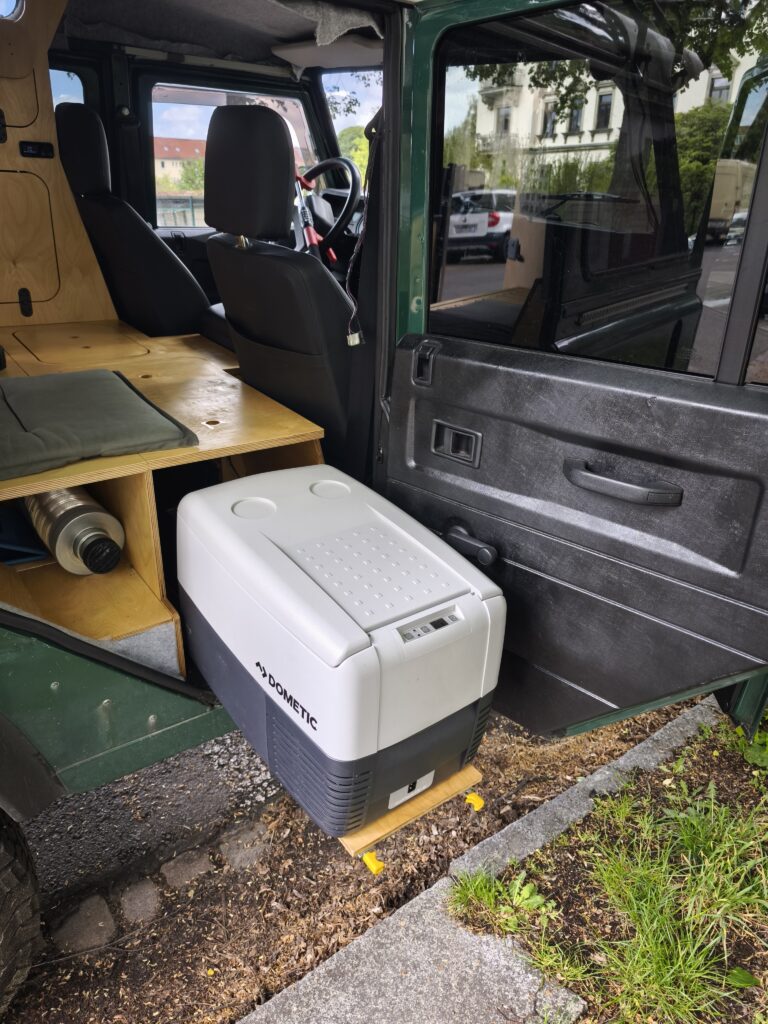
Compressor Fridge (36L)
Equipment: Keeping food fresh on extended overland journeys
A 12V compressor fridge was the logical next step after the first longer trips. 36 liters fit well in the Defender’s cargo area and are enough for multi-day journeys without the fear of rotten food.
Power consumption is low enough that a longer standstill won’t put the battery at risk. And on uneven ground it runs just as reliably as on flat terrain. For trips where you’re out for several days without passing through civilization, a compressor fridge is less of a comfort consideration than a practical necessity.
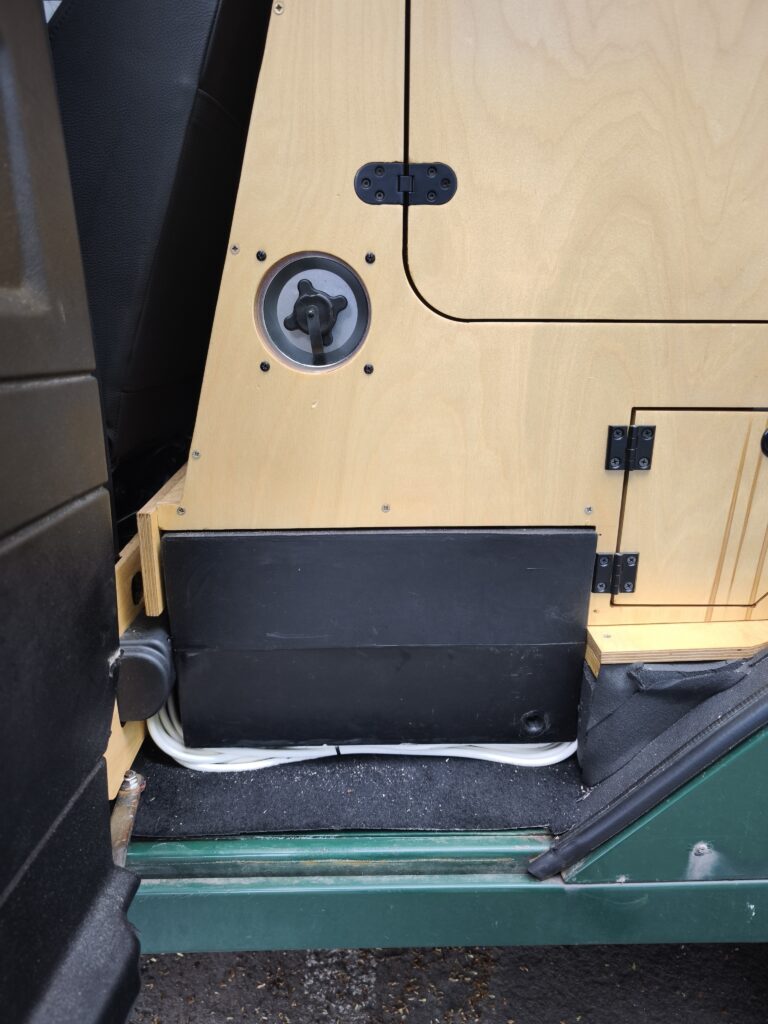
Water Tank (65L)
Equipment: Reliable water supply for remote travel
A 65-liter water tank is necessary for longer off-grid stays. It fits well within the Defender’s layout without compromising cargo space, and 65 liters covers cooking, and basic hygiene for several days without resupply. For drinking water we have a seperate tank.
The pressurized pump feeds both the sink and the shower – which makes a real difference after a dusty day on the tracks. The sealed design keeps the water clean even on rough terrain, so there’s no concern about contamination when the route gets technical. Tank placement was chosen carefully to keep the vehicle’s center of gravity as low as possible.
Having a reliable water supply on board changes how you plan a trip. Instead of routing around towns or campsites with water access, you simply stop where it makes sense – whether that’s a up in the mountains or a quiet forest track with no infrastructure in sight.
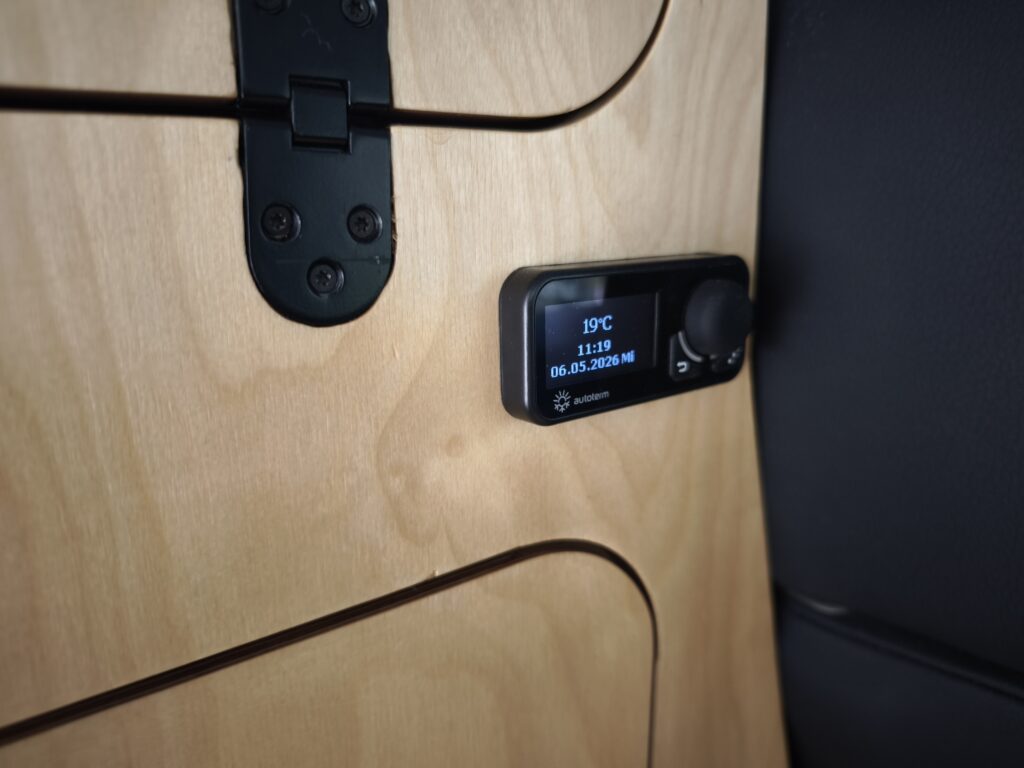
Diesel Air Heater (2kW)
Equipment: Maintaining comfort in cold conditions
A 2kW diesel heater was the obvious choice for cold nights without running the engine. It runs on 12V and draws fuel directly from the vehicle’s tank – no separate fuel supply needed, no significant drain on the auxiliary battery.
Output adjusts between 0.8 and 2kW, which covers everything from a mild chill to proper winter conditions. Fuel consumption stays low at 0.1 to 0.24 liters per hour depending on the setting. For high-altitude travel, the integrated altitude kit adjusts combustion automatically up to 3,400 meters – a detail that matters when the air gets thin and temperatures drop at the same time.
The result is a warm cabin wherever you stop, independent of the engine and without much thought required.
Read the full article about the installation of the heater here.
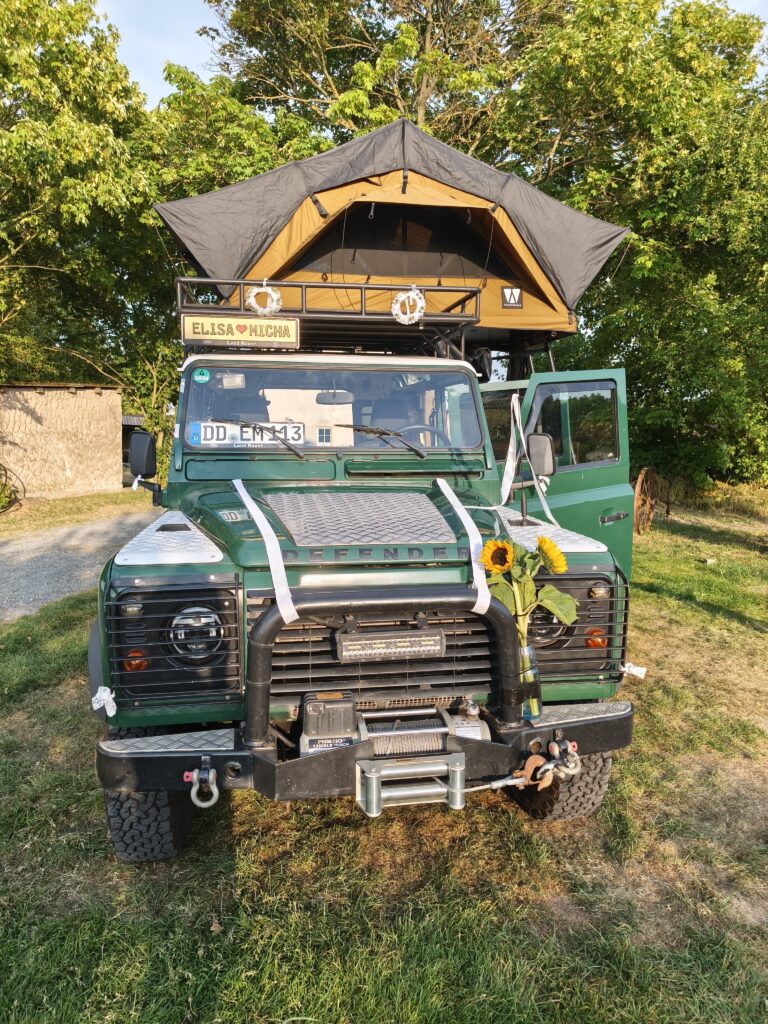
Roof-Top Tent (Folding, 140cm)
Equipment: Elevated camping accommodation
A rooftop tent was the most practical solution for a reliable sleep setup that doesn’t depend on finding flat ground or setting up camp from scratch each evening. The 140cm version sleeps two comfortably – 240 x 140cm of space with 115cm of headroom is enough to sit up, read, and actually move around.
Folded down to 31.7cm, the aerodynamic impact on the road is manageable and the 62kg weight sits well within the Defender’s roof load rating. The memory foam mattress means no sleeping pad needed, and the mesh base keeps air circulating on warm nights. LED lighting and mosquito netting on all openings round out the practical side.
What makes it work day-to-day is the setup time. Even solo, the tent is open and ready in a few minutes – which changes how spontaneous a stop can be.
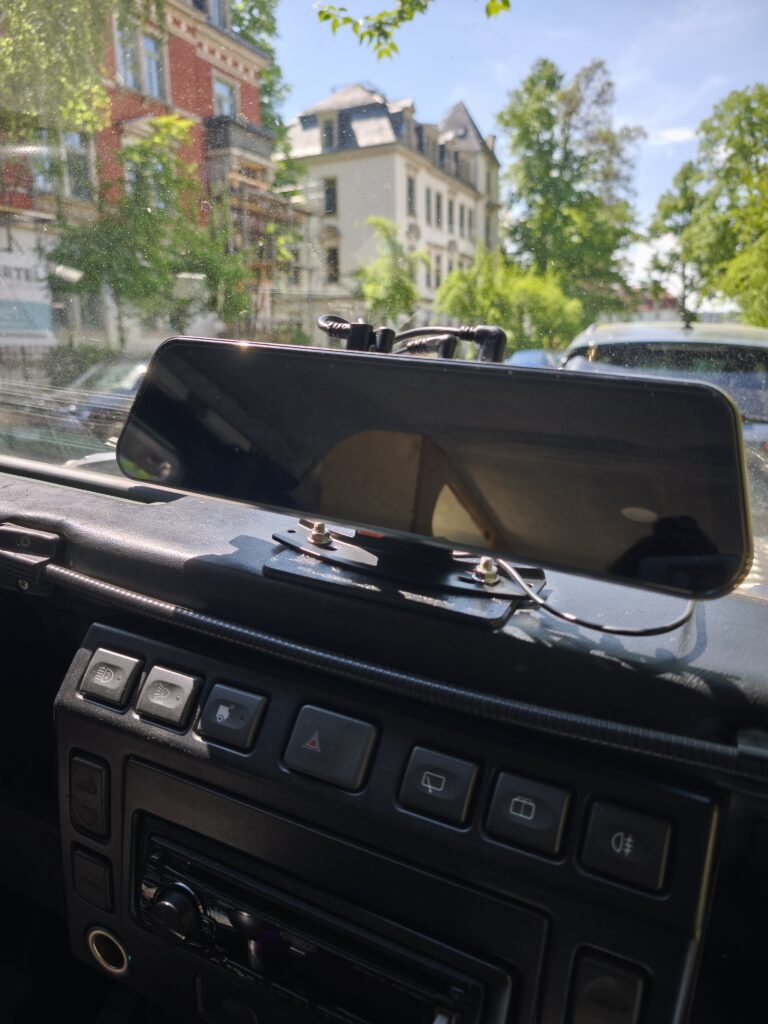
Dash Camera (3-Channel, 4K)
Equipment: Comprehensive journey documentation
A triple-lens dash camera was a practical addition once the trips got longer and the routes less predictable. Front, interior, and rear recording running simultaneously means the full picture is covered – not just what’s ahead.
The 4K front camera picks up road details clearly, which matters when documenting an incident or reviewing a tricky section after the fact. Built-in GPS logs route and speed data alongside the footage. At night, the system maintains recording quality without any manual adjustment needed.
Loop recording handles storage automatically, and the G-sensor locks collision footage before it can be overwritten. Once installed, the system runs in the background without requiring any attention – which is exactly how it should work.
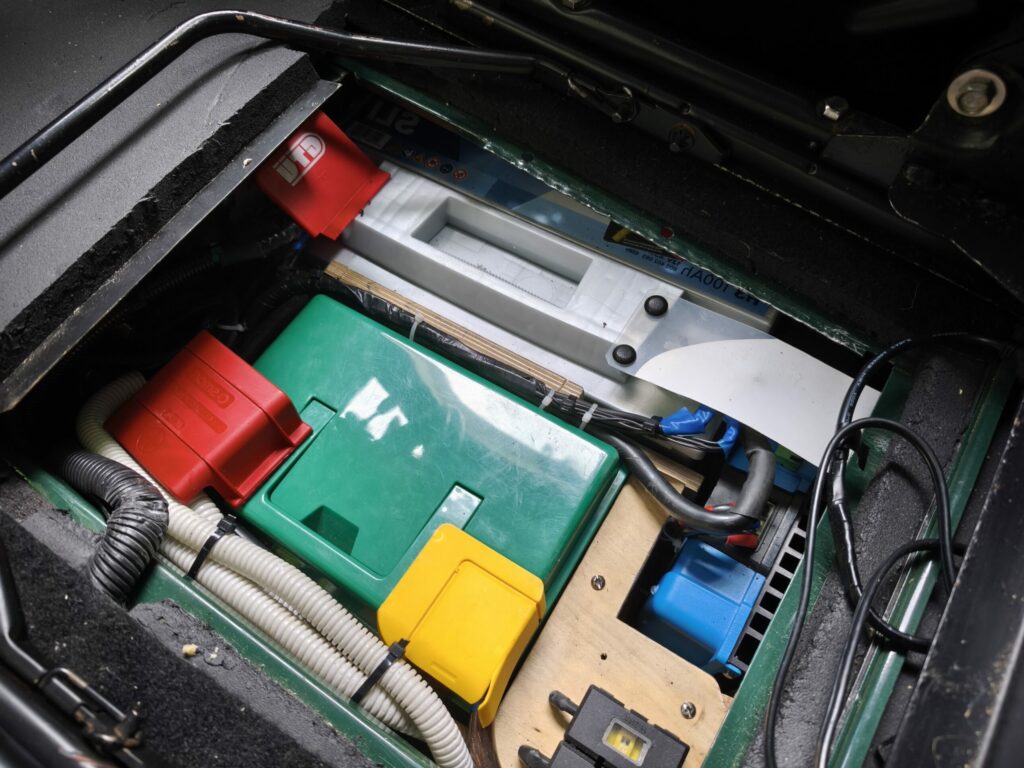
Auxiliary Battery (100Ah)
Power: Independent electrical supply for off-grid adventures
A dedicated 100Ah auxiliary battery keeps the vehicle’s starter battery completely out of the equation. No matter how much power the fridge, lighting, or heater has drawn overnight – the engine starts in the morning.
100Ah covers the essentials comfortably over extended periods. Compressor fridge, USB charging, diesel heater, lighting – all running without needing to think about it. Paired with a battery-to-battery charger or solar input, the system replenishes automatically while driving or parked under open skies.
It’s the part of the setup that makes everything else work.

Solar Panel (100W), 2x
Power: Silent, renewable energy collection wherever the sun shines
A 100W solar panel keeps your auxiliary battery topped up without running the engine or a noisy generator. Mounted on the roof or deployed on the ground at camp, it silently harvests energy throughout the day — making off-grid stays not just possible, but genuinely comfortable and sustainable.
The foldable design makes it remarkably practical for overlanding life. It sets up in seconds, handles the bumps and vibrations of rough terrain without complaint, and the weather-resistant build means an unexpected rain shower is never a cause for concern. Whether you’re parked in the dessert of Brandenburg or camped under a Scandinavian sky, your battery keeps charging and your adventures keep going.
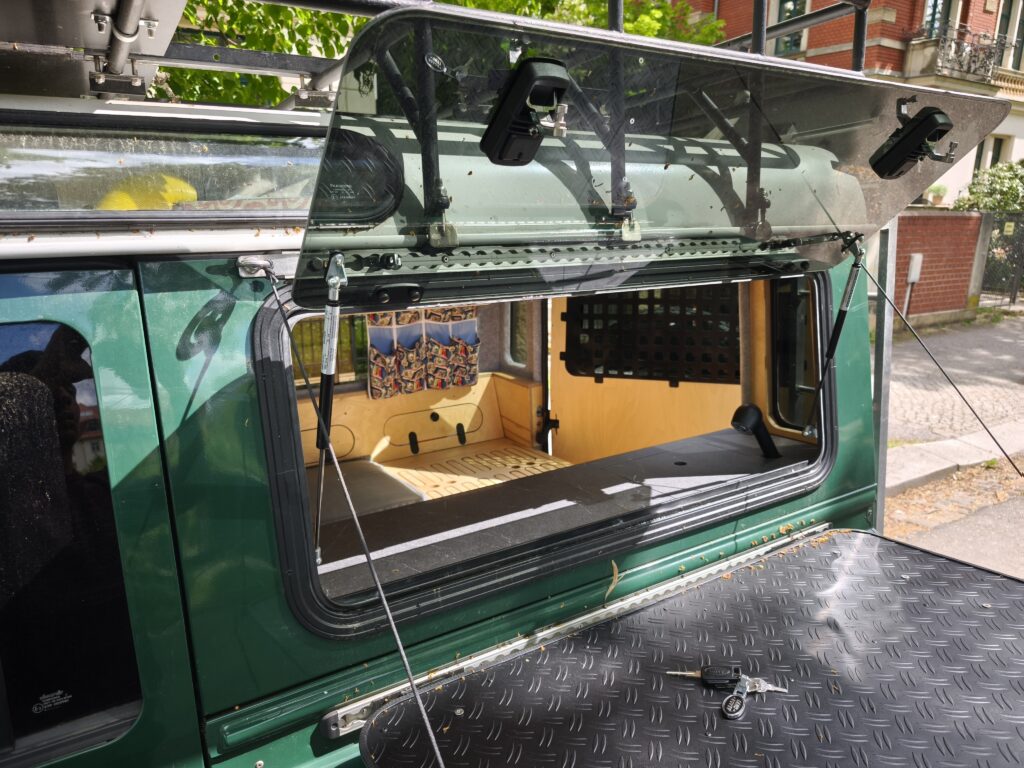
Gullwing Side Window
Accessibility: Effortless access and ventilation without leaving the vehicle
Replacing the fixed rear side glass with a gullwing window was one of those modifications that’s hard to explain until you’ve used it. The panel swings upward and suddenly there’s a direct, open connection between the interior and the outside – no door to open, no awkward reach.
The upward-opening design doubles as a natural canopy. Light rain, direct sun – the open panel handles both without closing off the access below. Grabbing gear, ventilating the cabin at camp, or simply passing something through becomes effortless.
It’s a small change on paper. In daily use, it’s one of the first things that gets noticed.
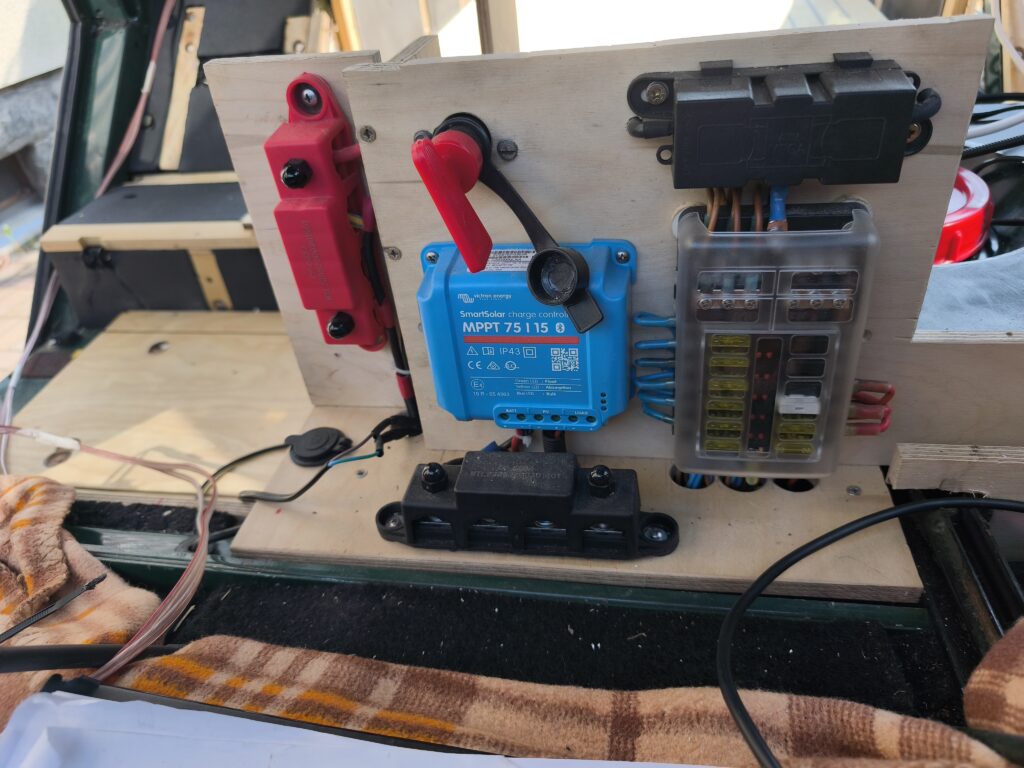
Solar Charge Controller (MPPT 75/15)
Power: Intelligent solar energy management for maximum charging efficiency
An MPPT solar charge controller sits between your solar panel and auxiliary battery, ensuring every available watt of solar energy is captured and converted as efficiently as possible. Compared to basic PWM controllers, MPPT technology can increase charging yield by up to 30% — a meaningful difference during shorter winter days or overcast conditions when every bit of energy counts.
The 75V input rating handles a wide range of panel configurations, while the 15A output comfortably manages a 100W panel setup with room to grow. Intelligent multi-stage charging prolongs battery life by automatically adjusting charge current and voltage depending on the battery’s state — protecting your investment and keeping your power system running reliably for years of adventure ahead.
DC-DC Battery-to-Battery Charger (12V)
Power: Smart charging that protects both your starter and auxiliary battery
A DC-DC battery-to-battery charger is the missing link between your Defender’s alternator and your auxiliary battery. Unlike a simple split-charge relay, it actively regulates the charging voltage and current — delivering a proper multi-stage charge to your auxiliary battery while ensuring the starter battery is never compromised in the process. This is especially important on modern vehicles with smart alternators, which a basic relay simply cannot handle correctly.
The isolated design means both battery circuits remain completely independent from each other, eliminating any risk of the auxiliary system dragging down the starter battery when it matters most. Bluetooth connectivity allows you to monitor charging status and fine-tune settings directly from your phone — giving you full visibility of your power system without opening the bonnet. Set it up once and it quietly does its job every single time you drive.