Welding Defender Footwell Panels: When You Can See the Road Through the Floor
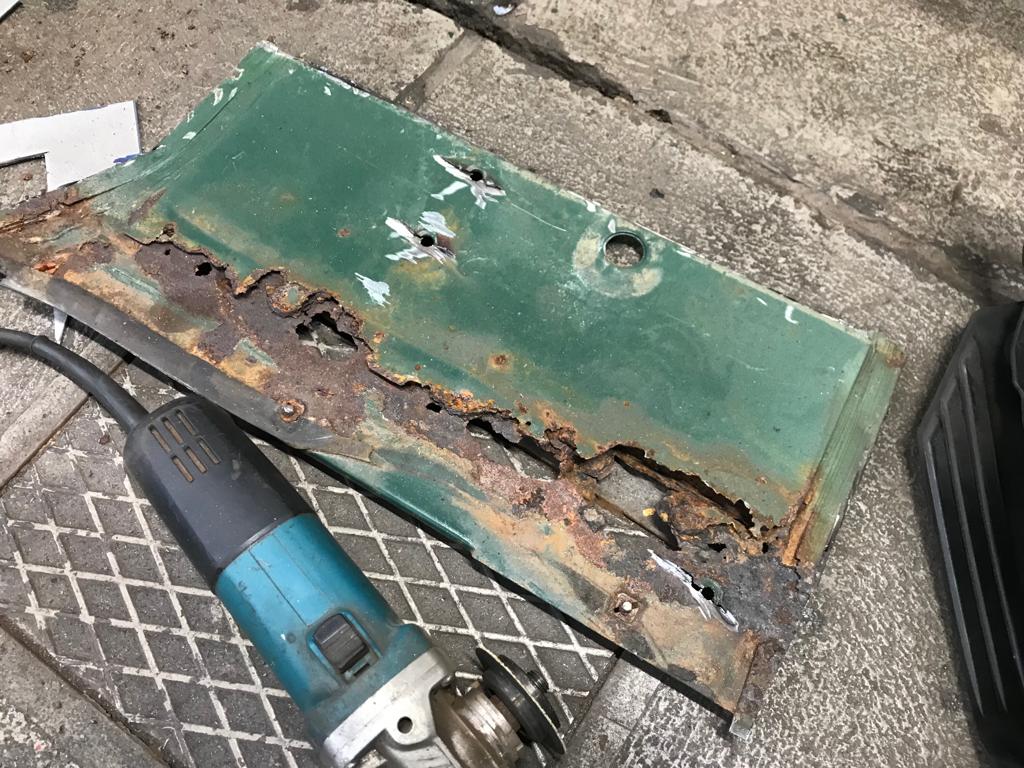
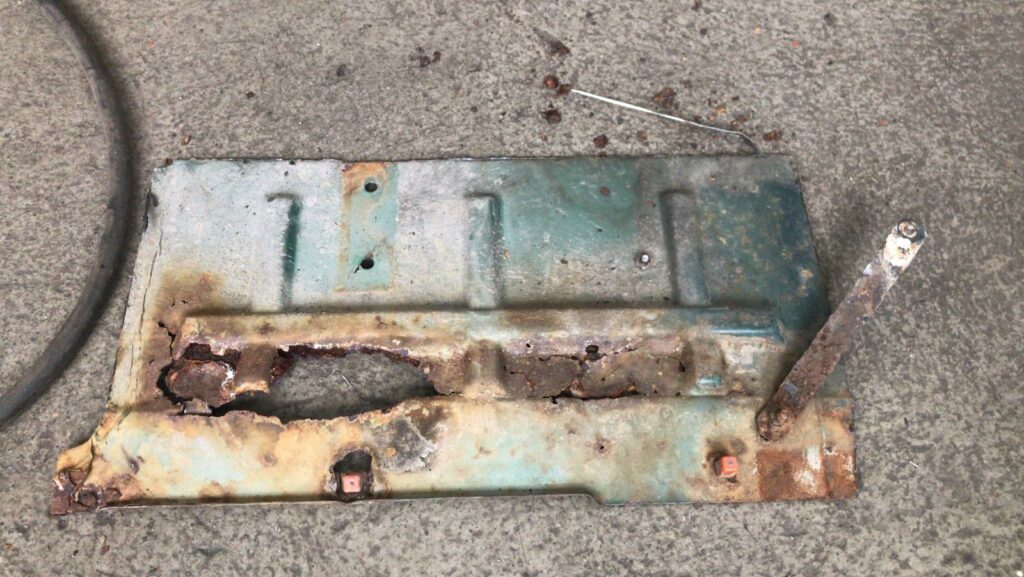
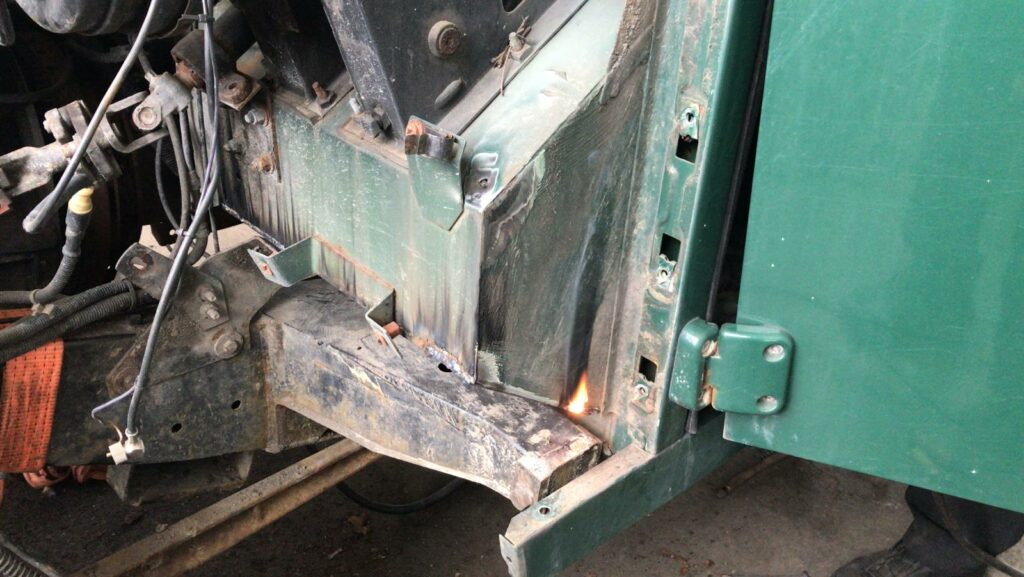
There’s that moment when you have to admit that “a bit of surface rust” is no longer an accurate description. For us, that was the day I bent down into the footwell and could see the workshop floor through the bottom panel. Not pretty — but honestly: footwell panels rot on Defenders. Almost every old Landy has this problem, and Eddie is no exception.
Why the Footwell Panels Are Almost Always Affected
The footwell is a moisture trap. Shoes drag in water, salt, and dirt. It all collects under the mats, and underneath those mats sits bare sheet steel. Add to that the typical Defender construction with its many overlapping panels and seams that hold onto moisture, and the result is something anyone who’s ever bought a 20-year-old Defender will recognise: rust eats through from below until holes appear. In our case, big enough for daylight to come through.
What We Did
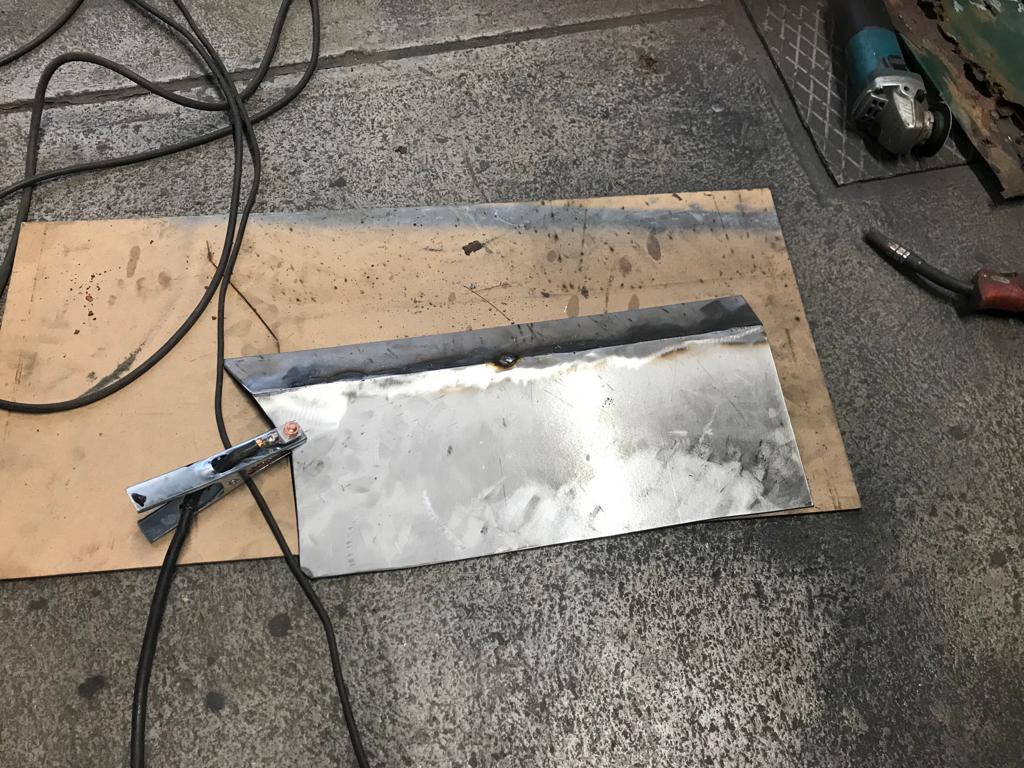
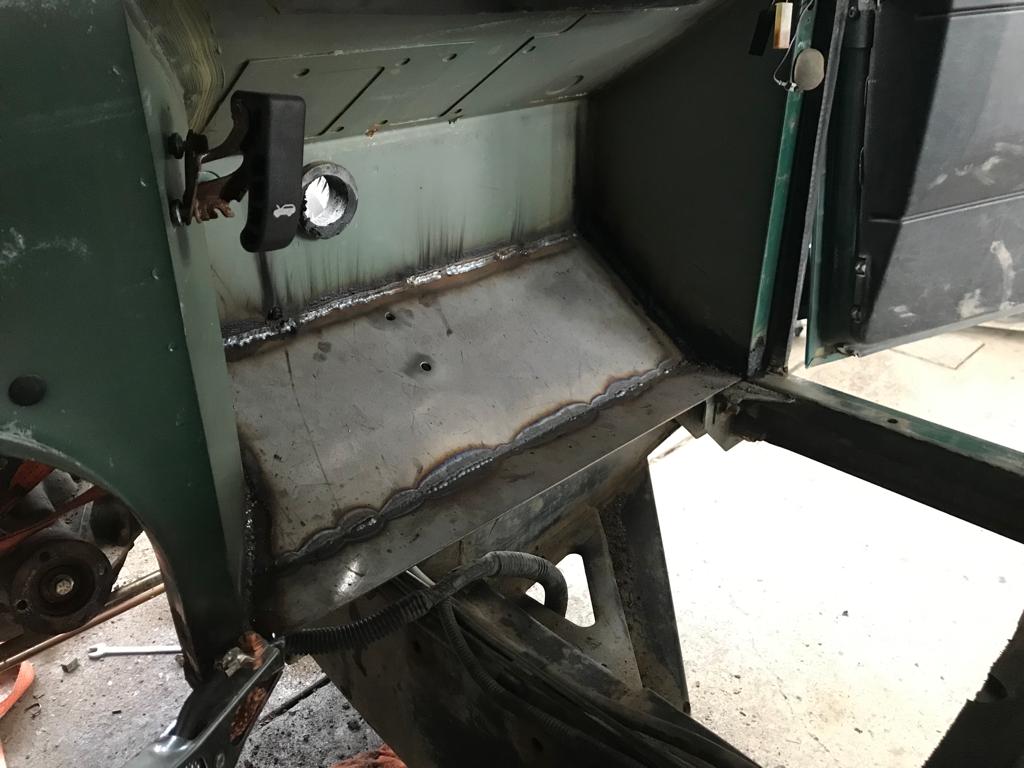
Repair panels are available to buy, but we fabricated the footwell plates ourselves from steel and welded them in. With the relatively simple, flat shapes of a footwell, that’s entirely manageable — and you get clean, solid material exactly where the old stuff has rotted through.
The rough process:
First, we cut out the rotten metal generously, until sound metal appeared all the way around. Anyone who cuts too conservatively here ends up welding onto rusty substrate — and that won’t hold. We made a cardboard template, transferred it to the new sheet steel, cut it to shape and adjusted the fit. Then welded it in, ground it back, and sealed and painted the seams so the rust doesn’t start all over again straight away.
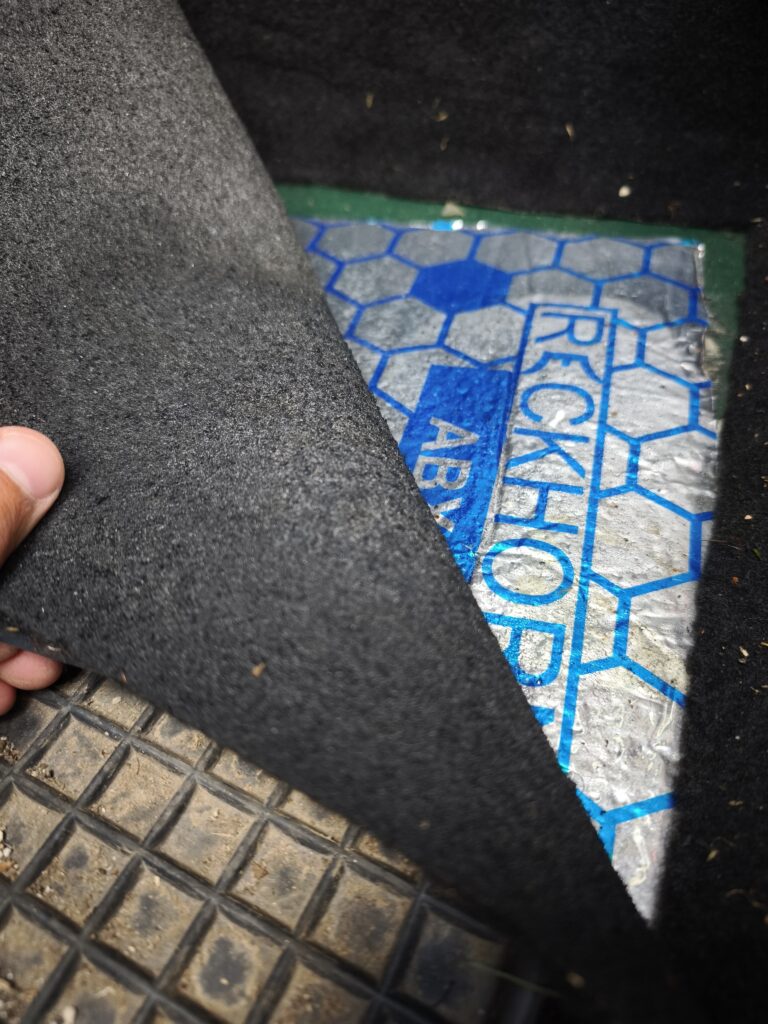
Later, our insulation went on top of this area anyway: alubutyl for the vibration damping.
Pitfalls
Welding in a footwell means working overhead and in awkward positions — not exactly where you lay down your best beads. Take your time, work in stages, and don’t burn through the thin sheet metal. And crucially: cut out every last bit of rust first. The most common mistake is setting the new panel cosmetically over the bad area. It looks fine for a year and carries on rusting happily underneath.
Conclusion
Not glamorous work, but honest work. If you can see through the floor on an old Defender, there’s no avoiding it — and once clean, sealed steel is in place, you have the foundation for everything that follows: insulation, flooring, the interior build. Bear in mind that moisture will continue to accumulate. We’ve layered up with sheet steel, alubutyl, interior carpet, and an additional rubber mat on top. Even so, moisture builds up from wet shoes. It helps to regularly lift the carpet and rubber mat and let everything air out.