
Defender Sound Deadening with Alubutyl: Why Less Is More
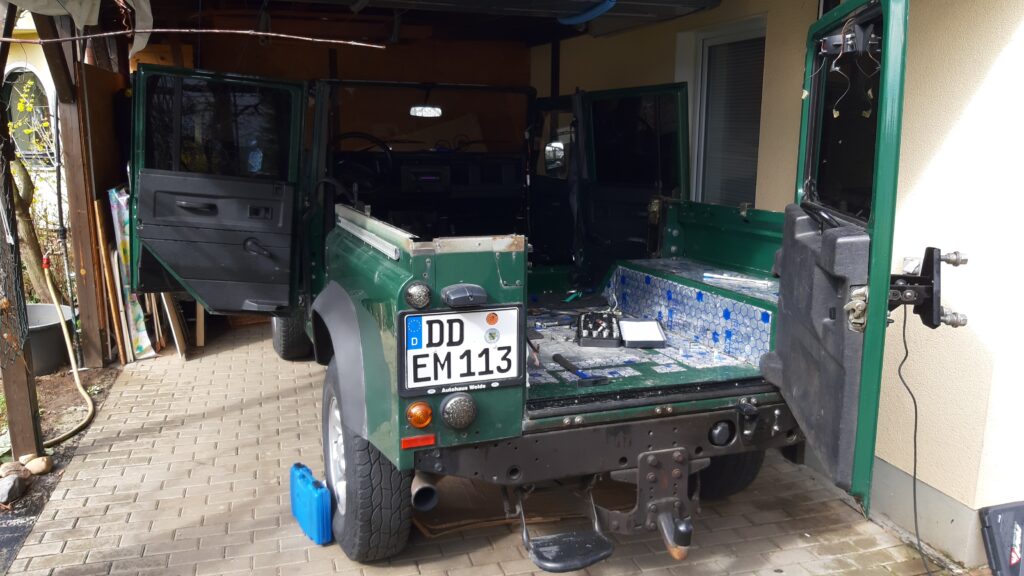
There’s a speed at which an old Defender stops being a car and starts being a drum. For Eddie, that threshold is around 100 km/h. Above that, the interior gets so loud that a normal conversation turns into a negotiation. Every other sentence gets repeated. Three things combine to make it that way: thin, large sheet-metal panels that resonate with any vibration; road noise coming through completely unfiltered; and our chunky off-road tyres rolling out their own rich carpet of noise on tarmac.
Thermal insulation alone doesn’t fix this. Armaflex keeps the temperature in check, but against the droning and vibrating of bare metal you need something different: mass. That’s why sound deadening came first for us, before any thought of insulation or the interior build.
Sound Deadening Is Not Thermal Insulation
This is the point where most people get confused, so let’s clear it up right away: sound deadening and thermal insulation are two separate jobs with two separate materials. Alubutyl calms the sheet metal so it stops acting like a speaker. Armaflex, on the other hand, insulates against temperature and prevents condensation. One doesn’t replace the other — they work in layers. In our build, the alubutyl layer sits directly on the metal. The Armaflex goes on top of it later (→ Insulation).
What We Used
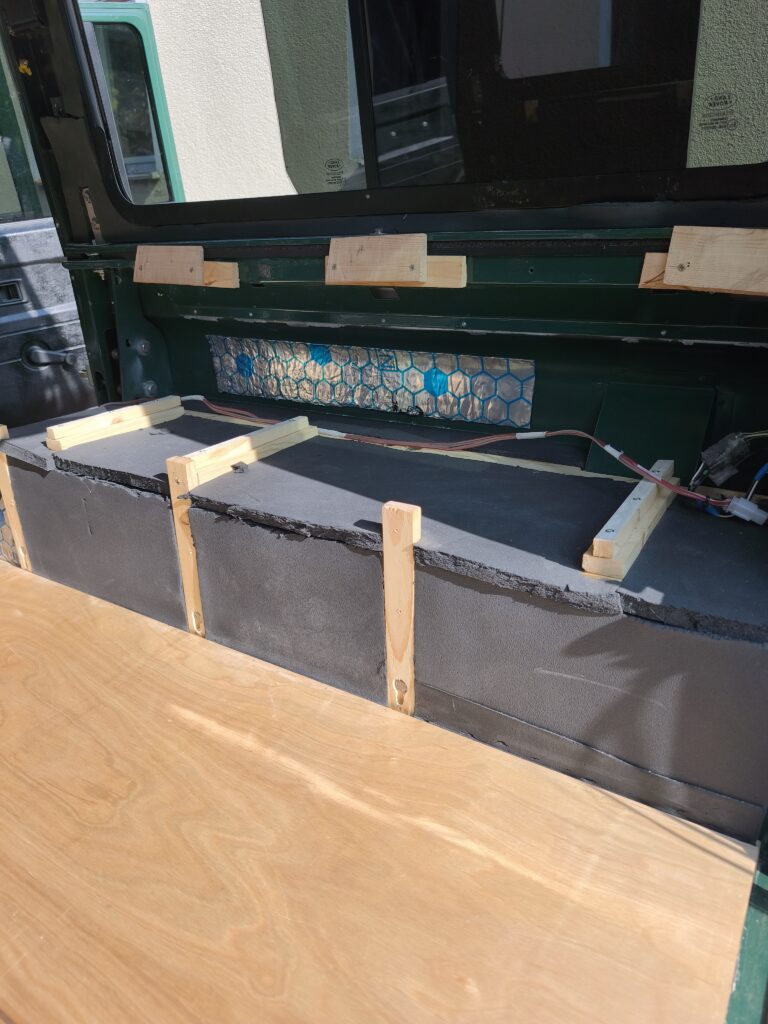
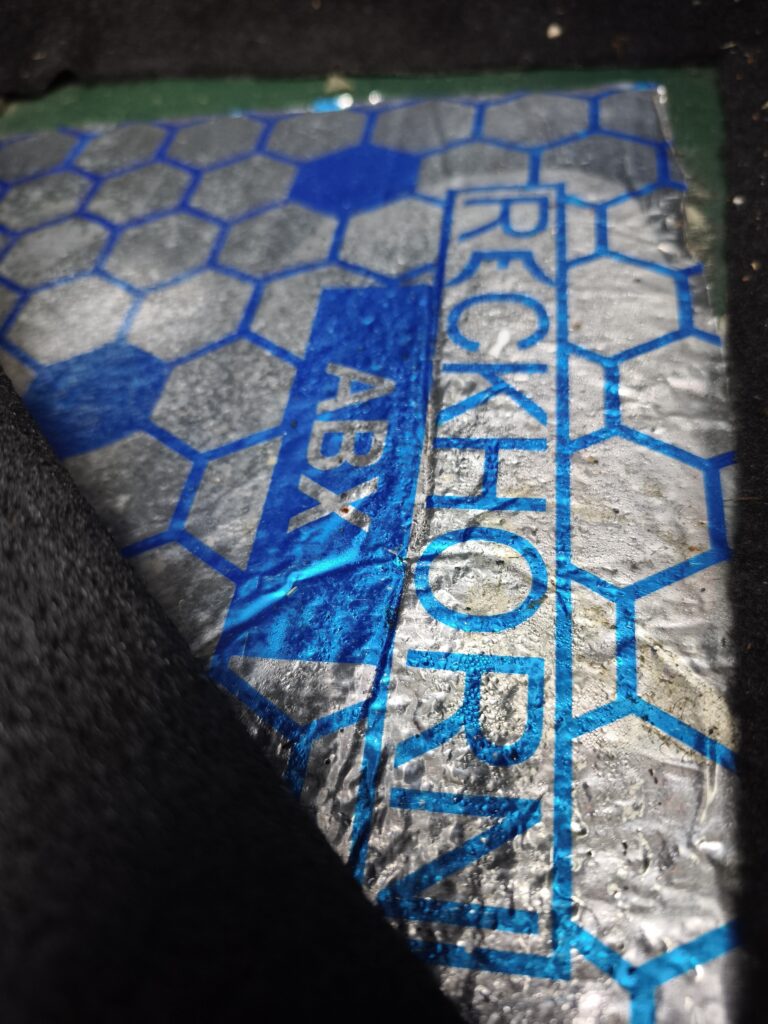
We used alubutyl sound deadening from Reckhorn — one roll was enough for Eddie. Not much else is needed: a roller, something to degrease the surface, and a box cutter for trimming. The roller gets the mats down bubble-free and with full contact. And degreasing makes sure the material actually sticks to the metal for good. Nothing complicated — but preparation is everything. Self-adhesive mats won’t hold permanently on greasy or dusty metal. We’d also recommend gloves, as the cut edges of the sound deadening can be very sharp.
Where We Applied It
We treated all the bare metal surfaces throughout the car — wherever the Armaflex would be going on top anyway. That includes the footwells in the driver’s area, the wheel arches, the rear door, the side walls, and the floor panels. In short: everywhere there’s a large, free metal surface that can flex and resonate.
The Most Important Trick: Don’t Cover Everything
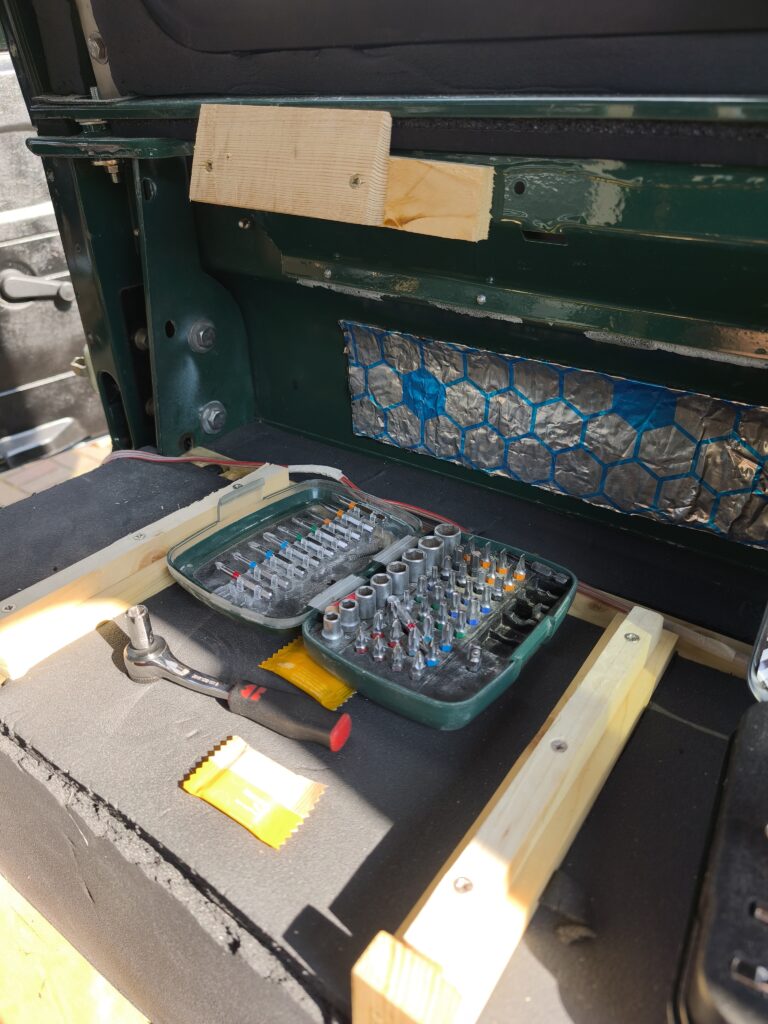
And here’s the point that surprises most people — and the one that saved us a good amount of money and weight. Alubutyl isn’t designed to be plastered over the entire car wall to wall. The effect comes from the added mass, which shifts the resonant frequency of the metal. For that, covering around 40% of the surface is enough. You place the mats where the metal is largest and freest to vibrate — usually in the centre of the panels. Edges and narrow strips can be left uncovered.
Covering the whole car does almost nothing extra acoustically, even though you see it in build videos all the time. It costs several times as much material and adds unnecessary weight. And weight isn’t exactly something the Defender is short on (→ Interior Build). Anyone telling you to cover every square centimetre is either selling you more mats than you need, or simply hasn’t tried it themselves.
The Result
We were genuinely pleased after the first test drive. The difference is night and day. The hollow, tinny drone is gone. The road noise becomes a fuller, deeper background hum. And — the best measure of all — you can now have a normal conversation again at higher speeds without anyone having to raise their voice. Every single piece we stuck down was worth the effort. That said, it doesn’t mean we’re suddenly sitting in a luxury car. After seven hours on the motorway, you’re still glad to step out and enjoy the quiet.
Conclusion
Sound deadening is one of those modifications with the best ratio of effort to noticeable result. One roll of alubutyl, a roller, an afternoon’s work — and afterwards a car where you can talk to each other again above 100 km/h. Just please: apply it smartly, not excessively. Thermal insulation comes next (→ Insulation).