
Camper Electrics in the Defender: Off-Grid Living Without Killing the Starter Battery
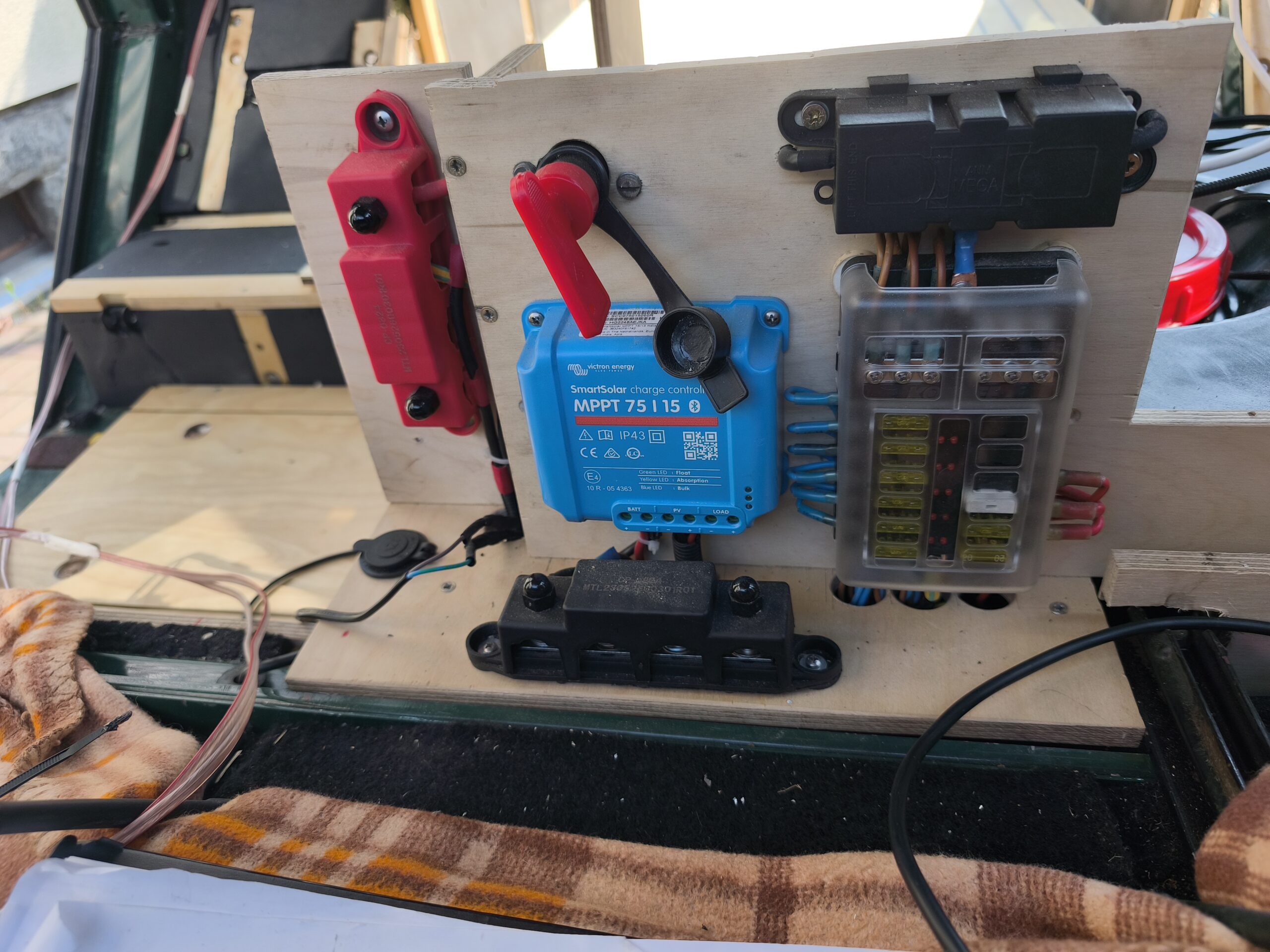
Power is the thing that decides whether a vehicle truly becomes a home or just a glorified tent on wheels. Our goal was clear: full energy independence — coolbox and diesel heater running, the ability to work on the road, and never waking up to a flat starter battery.
A note upfront: we’re deliberately not naming any products here. The concept works with components from various manufacturers, and we don’t want to recommend anything we haven’t independently found to be good.
What the System Has to Handle
Three things were non-negotiable: the coolbox runs continuously. The diesel heater draws its power from the leisure system, not the starter battery. And we wanted to be able to stay put for two or three days without driving or hooking up to mains power — without having to do the maths. Add to that working on the road: laptop, lighting, charging.
The Basic Setup
The heart of it is a separate leisure battery (in our case two batteries), isolated from the starter battery. Charging happens two ways: via the alternator while driving — through a battery-to-battery charger that takes the vehicle’s supply voltage and converts it cleanly into the right charge voltage for the leisure side — and via solar with an appropriate charge controller when we’re parked up.
We made a deliberate choice to fit no inverter. Everything we run works on 12V or charges via USB/PD. No inverter means: fewer losses, less heat, less complexity, and one fewer consumer quietly drawing power in the background.
Two switches give us control:
- a main switch for the interior, which lets us cut power to the entire leisure system, and
- an isolator switch that separates the starter battery from the leisure battery — ensuring the coolbox running continuously never reaches the starter battery under any circumstances.
Installation Location: It Gets Tight
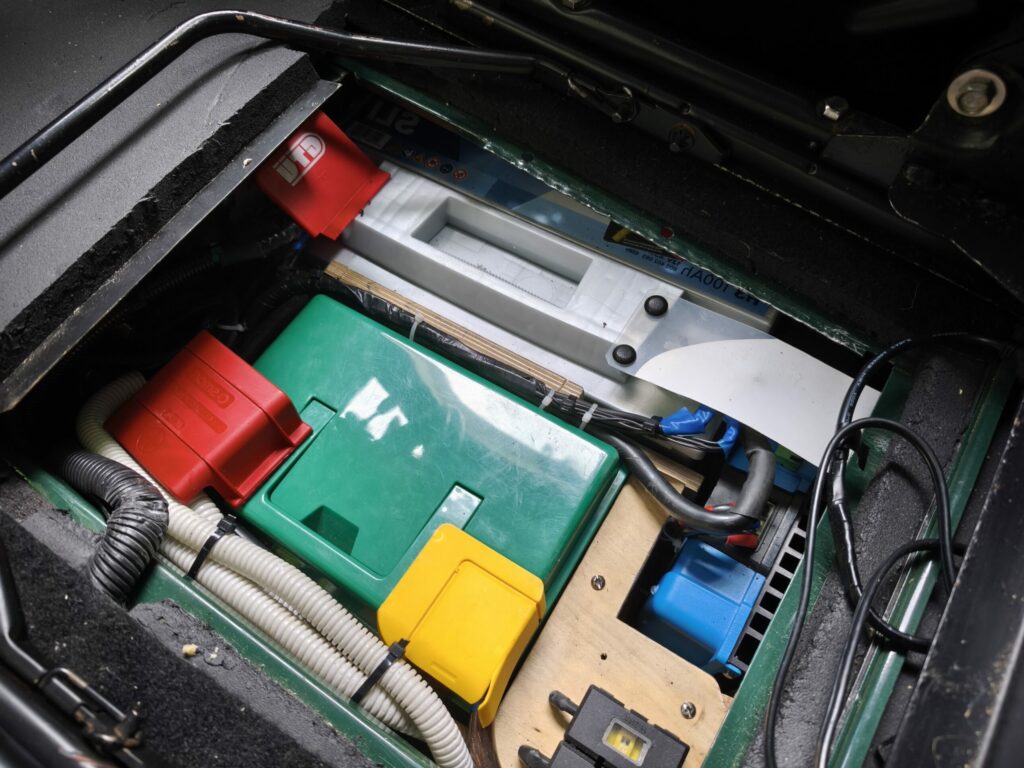
Our batteries and B2B charger sit under the driver’s seat. Honestly, space is extremely tight there — fitting two batteries plus a charger into the available space is millimetre work. But it fits. If you’re planning this: measure first, buy second — never the other way round.
The fuse and distribution box, on the other hand, we deliberately positioned somewhere accessible, behind the main box. We can get to it at any time — and trust us, you want to be able to reach your fuses without having to dismantle half the interior.
Cabling and Protection
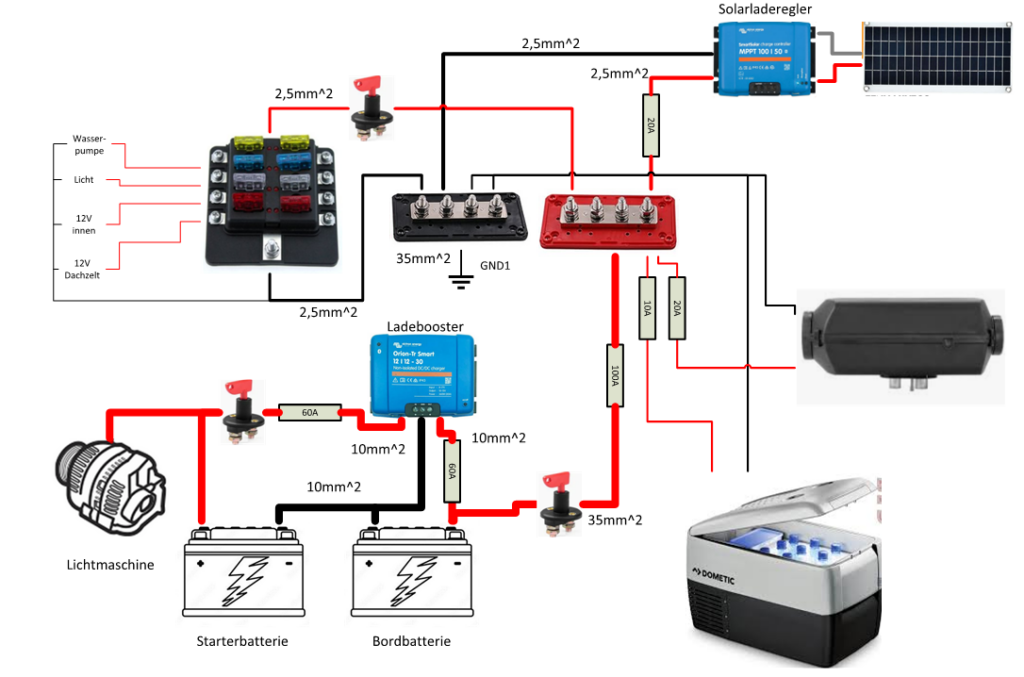
The invisible part you can’t cut corners on. Go generous with wire cross-sections, fuse every circuit appropriately, and make clean earth connections. We drew the charging concept and wiring out as a proper circuit diagram beforehand — that’s not optional, it’s essential. A diagram shows you before you start drilling whether your concept actually works, and it’ll help you diagnose faults years down the line.
Safety — Not a Place for Half-Knowledge
To be clear: if you’re not sure what you’re doing, have a professional do it. Electricity is not forgiving. Undersized cables and missing or incorrectly rated fuses are a genuine fire risk — in a built-out vehicle that you sleep in. There’s no shame in drawing up the circuit diagram yourself and having the installation checked or carried out by someone qualified.
Conclusion
Our system is deliberately lean: two charging paths, no inverter, clear switches, everything important accessible. That’s exactly what we need for everyday life — coolbox, heater, working — without lying awake worrying about a flat starter battery in the morning.